

Case Presentation
An 81-year-old male was evaluated and discharged from the emergency department with a mild gastrointestinal (GI) bleed but began to experience increased blood loss after returning home. Ridgeview Ambulance in Minnesota responded when the patient became profoundly weak, lethargic, and hypotensive. On EMS arrival, he appeared pale with a systolic blood pressure of 76 mmHg, a heart rate of 90 bpm, and a shock index of 1.1, consistent with worsening hemorrhagic shock.
Resuscitation Strategy
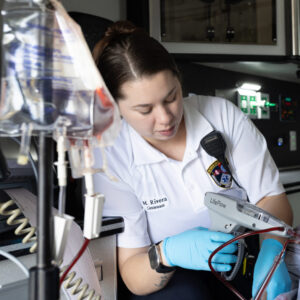
Recognizing the patient’s ongoing hemorrhage and hemodynamic instability, the EMS crew initiated a prehospital transfusion of two units of warmed O-positive packed red blood cells using LifeFlow and the QinFlow Warrior blood warmer. The transfusion was completed in approximately 10 minutes through peripheral IV access, allowing for rapid restoration of circulating blood volume while en route to the hospital.
Outcome
The patient demonstrated significant clinical improvement during the transfusion. Blood pressure increased to 121/59 mmHg, heart rate decreased to 77 bpm, and shock index improved from 1.1 to 0.6. He also became more alert, reporting that he felt “much better.” Upon arrival at the hospital, the patient remained hemodynamically stable despite limited overnight GI specialty availability. He underwent definitive evaluation the following morning, was discharged the next day, and required no additional blood transfusions during his hospitalization.
Clinician Feedback
The EMS crew reported that LifeFlow enabled substantially faster blood administration than conventional methods while remaining simple to set up and operate in the prehospital environment. Completing the transfusion rapidly also allowed providers to focus on other critical aspects of patient care during transport.
Clinical Discussion
Patients with significant GI hemorrhage can deteriorate rapidly as ongoing blood loss progresses to hemorrhagic shock. Early prehospital blood transfusion can restore perfusion, improve mentation, and stabilize hemodynamics during transport, allowing more thoughtful decision-making after hospital arrival and potentially reducing the need for further heroic interventions. This case demonstrates how rapid resuscitation with warmed blood through peripheral IV access can be readily accomplished in the field, leading to improved patient outcomes.